Why DNA's Shape Matters
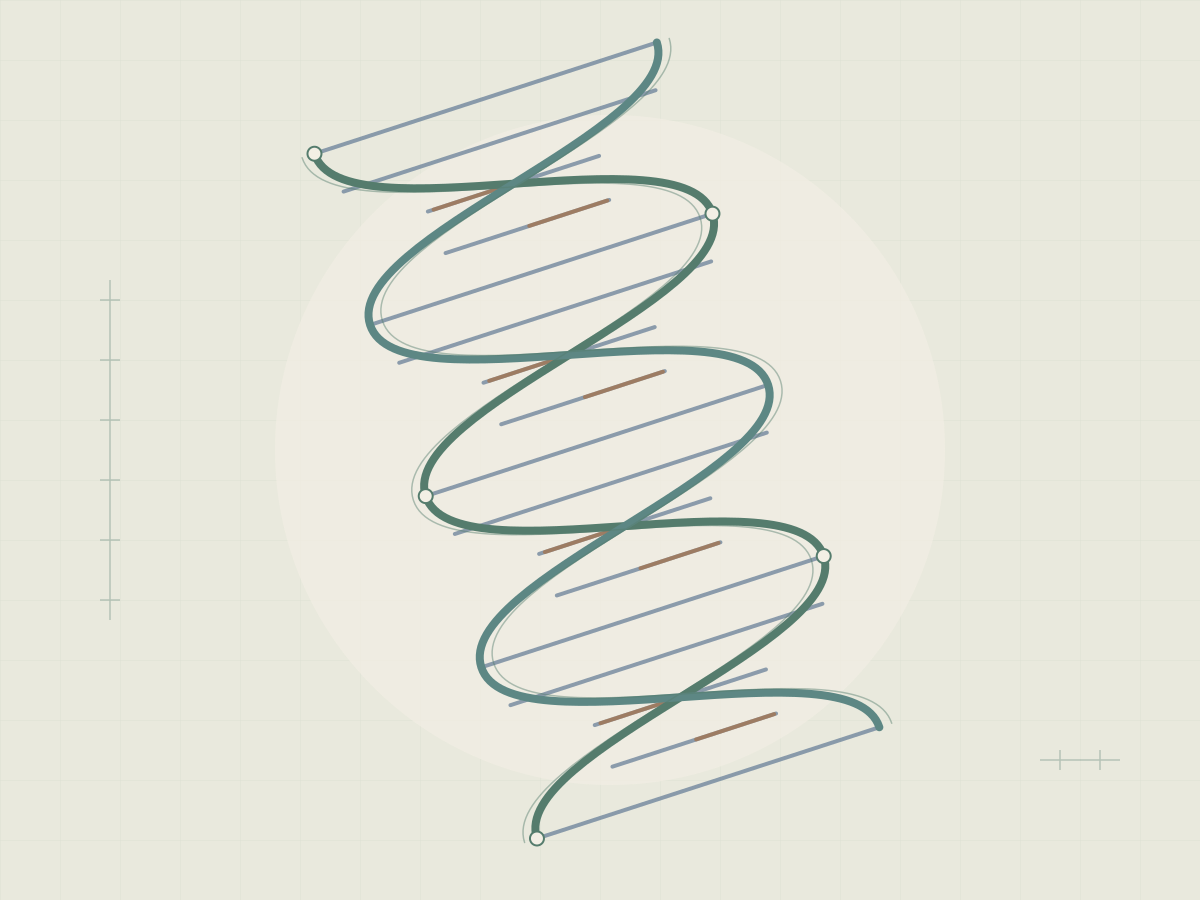
How molecular geometry turns a polymer into a durable information-bearing structure.
Sample article: replace or rewrite this piece when you begin publishing your own work.
The famous double helix is easy to treat as a logo. It appears on laboratory doors, school books, health advertisements, and almost any design that wants to say “biology.” But the shape is not decorative. Geometry is part of what makes DNA useful.
A molecule with an inside and an outside
DNA’s sugar-phosphate backbone faces the surrounding water while its nucleotide bases are packed toward the interior. That arrangement protects the chemically informative part of the molecule and gives the polymer a repeating structural rhythm.
The two strands also run in opposite directions. Their pairing is specific enough to preserve information, yet reversible enough for cells to separate the strands during replication and transcription.
Information has to be physical
Calling DNA “information” can make it sound abstract. In a cell, however, information always has material consequences. Bases occupy space. Bonds have energies. Proteins must recognize actual grooves and chemical groups.
The helix therefore creates a useful compromise: stability without complete inaccessibility.
That idea is worth carrying beyond genetics. Biological information is never detached from matter. It survives because molecular structures make certain interactions more likely than others.