A Cell Membrane Is Not a Wall
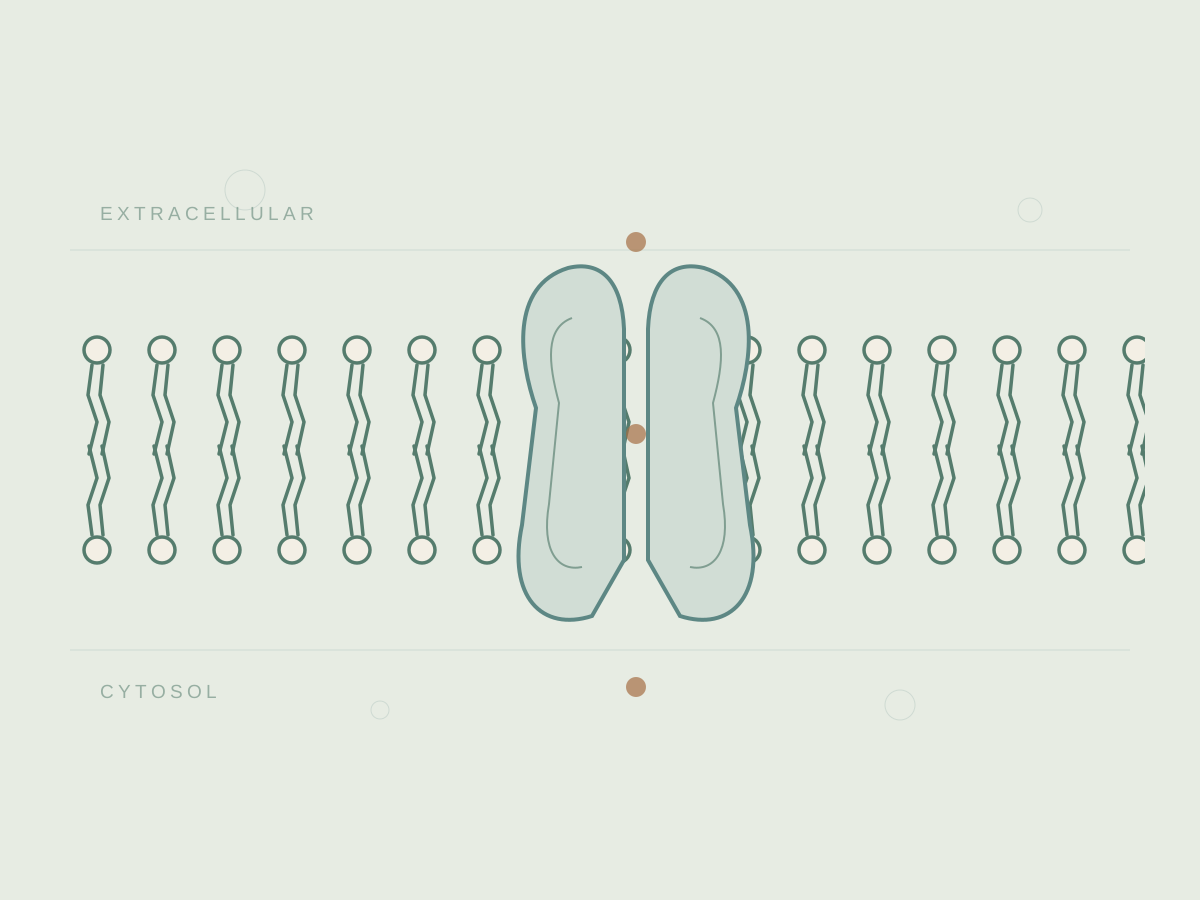
Thinking about membranes as active boundaries rather than passive containers.
Sample article: this exists to demonstrate the article layout and can be deleted later.
Draw a cell quickly and the membrane becomes a circle around everything important. That sketch is useful, but it encourages the wrong intuition: a membrane looks like a wall.
A living membrane is closer to a negotiated border.
Selective, moving, crowded
Lipids arrange themselves because of how their polar and nonpolar regions interact with water. Proteins interrupt that lipid sea, moving substances, receiving signals, attaching structures, and catalyzing reactions.
The boundary is therefore active. A cell survives not by sealing itself away from its environment, but by controlling exchange with extraordinary precision.
The boundary creates the system
Once an inside can be kept chemically different from an outside, gradients become possible. Gradients can store usable energy. Reactions can be localized. Components can reach concentrations that would be impossible in an open solution.
The membrane does more than protect the cell. It helps make the cell a distinct chemical system in the first place.